Posts tagged cultural worlds
 Crazy in the same way?
Nate
:
Does the nature of psychotic delusions change over the centuries? Or are “crazy” people crazy in the same ways regardless of where and when they lived and died?
Slovenian researchers analyzed more than 120 years’ worth of patient reports from the Ljubljana mental hospital, and their findings suggest that psychotic delusions are profoundly shaped by contemporary society, with the technology of the day—be it the telegraph or the television—playing a prominent role. The researchers also found that the “persecution delusion” (a paranoid narrative in which the subject feels hounded by evildoers) is a relatively modern phenomenon: a reaction to the possibility of nuclear war and to Cold War conspiracy flicks like The Manchurian Candidate. In this sense, schizophrenic delusions are a twisted mirror to the world we live in.
Nate
:
 They vote by night

Nate
: Cicero, Illinois
Nate
: Worship first, then farm
Nate
:

To Schmidt and others, these new findings suggest a novel theory of civilization. Scholars have long believed that only after people learned to farm and live in settled communities did they have the time, organization and resources to construct temples and support complicated social structures. But Schmidt argues it was the other way around: the extensive, coordinated effort to build the monoliths literally laid the groundwork for the development of complex societies.
The immensity of the undertaking at Gobekli Tepe reinforces that view. Schmidt says the monuments could not have been built by ragged bands of hunter-gatherers. To carve, erect and bury rings of seven-ton stone pillars would have required hundreds of workers, all needing to be fed and housed. Hence the eventual emergence of settled communities in the area around 10,000 years ago. “This shows sociocultural changes come first, agriculture comes later,” says Stanford University archaeologist Ian Hodder, who excavated Catalhoyuk, a prehistoric settlement 300 miles from Gobekli Tepe. “You can make a good case this area is the real origin of complex Neolithic societies.”


Nate
:Think globally, lunch locally
Andy
:Several years ago, I lost my patience with our alienated, unattached world at lunch one day. I was waiting to get a sandwich at a place called Au Bon Pain. It’s a chain, it’s cheap enough, it’s fine. I was in a bit of a hurry. I eat late and the place was empty. There was no one in line, but I obediently stood in the proper place between the stanchions and waited to be told to approach the counter. Two sandwich makers were talking to each other behind the counter. They looked up, and I stepped forward meekly, and they continued their conversation. Fine, I waited. And waited. They laughed, I presume at me. I gave the customary attention-seeking cough and laser stare. Eventually one of them asked what I wanted in a surly tone and with a put-out look. The other guy slowly made the sandwich. I went back to the office to eat. The sandwich had tomato on it. I asked for no tomato.
I vowed never, ever buy lunch on a workday from a stranger again. It was a solemn vow that I break only under drastic circumstances. So, now I get lunch from Frank, Art, or Tommy, guys I have come to be friends with who run three different places. I like them. I think all three are funny, and they usually laugh at my jokes, which is key. I don’t see them except for lunch, but that’s fine. I enjoy spending money where I know the people. Lunch is now a little social part of my day, and I feel like I work in a real neighborhood, which it really isn’t. I love being a regular. I love purposefully limiting my choices instead of expanding them. Most of all, I think that I enjoy being loyal just for the sake of being loyal.
I don’t ever hate lunch anymore. I consider lunch one of my greatest triumphs.
Inshallah
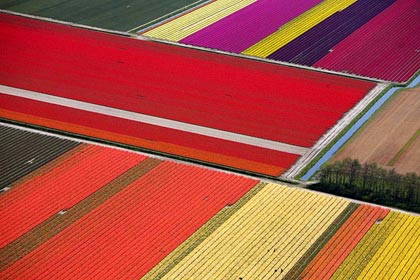
Finance | Too bad nobody in the West thought of it: Islamic banking is better weathering the meltdown because sharia law curbs excessive risk-taking, with bans on interest and trading in debt. The strictures on usury mean investments only in “productive enterprises.” [Washington Post]
Nate
:The first assimilation
Nate
:Juan Carlos Rivera knew that if he wanted to get a dishwashing job at the MacArthur Park hamburger stand, he would have to pretend to be Mexican. But the thought of lying made the Salvadoran anxious. He paced outside the restaurant, worried that his melodic Spanish accent, his use of the Central American vos, instead of the Mexican tú, would give him away. Resolving to say as little as possible, Rivera remembers steeling himself and stepping inside—into the world of Mexicanization.
In his best Mexican Spanish, the Salvadoran asked: ¿Tienen trabajo? (Do you have work?) When asked where he was born, he swallowed his pride and answered: Puebla, Mexico. The job was his. For three days, Rivera scrubbed plates in conspicuous silence. He knew the Mexican cooks were onto him. Especially the one from Puebla. “I would stay up late wondering, ‘What if they discover me? What if they take my job away? What if they beat me up?’“ Rivera said.
Twenty years later, those fears have vanished but the 35-year-old continues to pretend. Life in Southern California is just less complicated as a Mexican, he says. Fitting in is easier. He introduces himself as Mexican. He says his closest friends are from Mexico and he eats nothing but Mexican food. Rivera and thousands of other Central and South American immigrants have left their native countries only to arrive in an American city dominated by Mexicans, who comprise L.A.’s largest Latino group and have access to most of the jobs sought by immigrants. The metropolis drives many to Mexicanize, to degrees big and small, often before they start to Americanize.
Nate
:It is not necessary to be Russian in order to appreciate holy fools however it seems to help.
There is a long tradition of fools for Christ’s sake in both Western and Eastern Christendom, containing both real fools and fools ex officio. In the West for example, St. Francis of Assisi exhibited some of the characteristics of holy folly, as did the order he founded. But it is Eastern Orthodoxy especially in Russia, that has produced the richest collection of holy fools. In the case of Russia the argument could actually be made that holy folly became a major theme in the national culture, both oil the popular and literary levels Dostoyevsky’s novel The Idiot being the undisputed literary climax of the tradition). Holy folly in the Eastern church may go back to the early days of the desert saints of Egypt, but the phenomenon became prominent in the sixth century Famous cases are those of Theophilus and Maria of Antioch, and of St. Symeon of Emesa Theophilus and Maria came from aristocratic families. They were engaged to be married, instead decided to become fools for Christ’s sake. They roamed the streets of the Syrian metropolis, he dressed as a jester, she as a prostitute, outraging the populace with bizarre and often obscene behavior. Gradually, it was recognized that this behavior was an expression of unusual piety. St. Symeon was an anchorite in the lands east of the river Jordan. He too began to roam through the towns and villages of this area. He would throw walnuts at people in church, overthrow the stalls of street vendors, dance with prostitutes in the street, burst into women’s bath houses and conspicuously eat on fast days. At first, of course, the reaction to this behavior was outrage. Then it came to be accepted that the behavior symbolized great religious mysteries…
Geography of longing

Nate
:Virtue as vice
Nate
:It is not hard to raise questions about the value of eating fish, or about the ecological consequences of mining quartz for those crystals that make us feel so at one with the earth. And is it really worth the petroleum, the pollution, the environmental wear and tear, to import drinking water? Such questions would be inevitable, if these were not the tastes of people who are strongly identified in their own minds as virtuous, and if these were not in fact signs by which they make themselves recognizable to others and to themselves as virtuous. For a very long time this country has figured in the world as a great appetite, suddenly voracious, as suddenly sated, disastrous in either case. The second worst thing that can be said about these virtuous people is, they have not at all escaped the sins of their kind. The worst thing that can be said is they believe they have escaped them.
Tough luck, Mel
Nate
:A filmmaker’s dream of building a Hollywood-style studio in the northern part of South Africa has been blocked after a passionate campaign by the local Khoi-San community. Residents of the remote and desolate town of Pella say they do not care about the millions of dollars promised or the prospect of A-list celebrities flying in on private jets and instead wanted to keep their “sacred” scrubland, which was won in battle by their forefathers.Desert Star Studios wanted to transform their ancestral lands into a giant studio featuring biblical and cowboy film sets, production offices, stunt tracks, storehouses, and workshops, plus a luxury resort, golf course, and private landing strip. The consortium planned to spend $14 million on the project which it says would create 18,000 jobs and generate a further $14.2 million income for the area over the next 10 years—a huge sum for a relatively poor province.
A visit to the semi-desert area can see its potential. The flat scrubland nestles between giant mountains under clear blue skies. There are hidden valleys cut by tributaries to the mighty Orange River, and one mountain resembling the doomed Israeli fortress of Masada.
But the filmmakers underestimated the will of the local 5,000-strong population who put the spiritual value of the land over any potential economic gain and nixed the plan last month. “No money in the world can buy this land,” says Ina Basson, secretary of the Pella Community Forum. “It is ours and has sentimental value. Our forefathers fought the Germans for this land and had to battle to keep it. They have spilled blood for the land and for us, and it is not for sale. “[The producers] said Mel Gibson and Halle Berry would fly in to do movies, and that Tiger Woods would design the golf course,” adds Ms. Basson. “We don’t care about them. We want to live here.”
Nate
:Nate
:The one thing that pepper, cinnamon, cloves, nutmeg, ginger, saffron, and a whole series of other spices had in common was their non-European origin. They all came from the Far East. India and the Moluccas were the chief region for spices. But that’s only a prosaic description of their geographic origin. For the people of the Middle Ages, spices were emissaries from a fabled world. Pepper, they imagined, grew, rather like a bamboo forest, on a plain near Paradise. Ginger and cinnamon were hauled in by Egyptian fishermen casting nets into the floodwaters of the Nile, which in turn had carried them straight from Paradise. The aroma of spices was believed to be a breath wafted from Paradise over the human world.
 Portland Sacred Harp

Nate
:
Nate
:
Nate
:The places we live
Nate
:One billion people live in slums. Their numbers are supposed to double over the next quarter-century. So: Who are those people — and what must their lives be like?
The Norwegian photojournalist Jonas Bendiksen has spent a good deal of time in Indian, Kenyan, Indonesian, and Venezuelan slums, and his website, The Places We Live, features dazzling 360-degree photos of homes and shanties, navigable and altogether immersive, along with audio recordings made by the inhabitants. Prepare yourself to gape, gasp, laugh, cry, and experience every emotion in between: In Mumbai, you’ll meet the Shilpiri family (15 people crammed into a tiny space through which floodwater and garbage regularly stream). In Nairobi, the head of the Dirango household takes great pride in his cramped abode, giving a tour that takes just seconds. “You have to visit somewhere before you judge,” he explains. Thanks, Mr. Bendiksen, for starting us on the journey.